Packing List for a Combat Sports Camp in Thailand (2026)
A packing list built by travelers who have been to Thailand six times, not written by someone who Googled ‘Muay Thai trip essentials.’
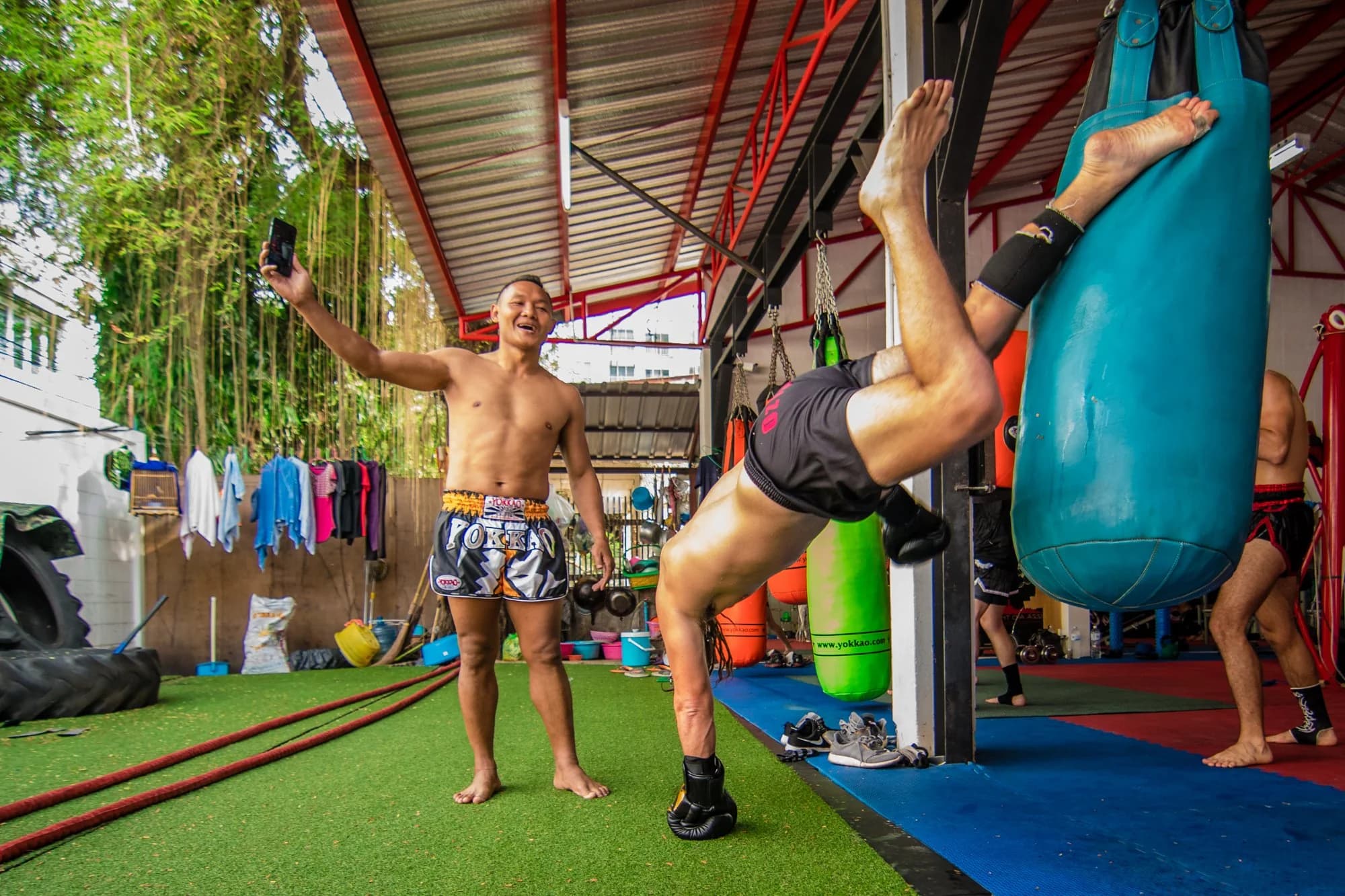
The gear rule for Thailand: bring what you already trust, buy what is cheaper locally, and leave at home anything you are packing ‘just in case.’
On this page
Carry-on+1
The ideal Thailand training setup: a good carry-on plus one checked bag with room for gear you buy locally.
The packing philosophy
Less than you think
Thailand is not a remote outpost. Bangkok, Phuket, and Chiang Mai have every piece of training gear you could want at a lower price than your home gym pro shop, often with better local-brand options than imported equivalents. Packing for a Thailand combat sports trip should follow a simple rule: bring what fits you perfectly, buy what is cheaper locally, and leave at home anything you added “just in case.”
If you are staying a month or longer, pack for the first 3–4 days of training and the first night of sleep. Everything else you can sort in-country by day two.
Bring from home
The short list. These items matter for fit, hygiene, or because Thai shops may not stock your exact spec.
Hand wraps (2–3 pairs)
Light, cheap, and you always need a dry pair ready.
Mouthguard
Boil-and-bite or custom. Bring a spare if you already own one.
Running shoes
Bring a well-fitting pair and expect to buy a second beater pair locally.
3–4 quick-dry training shirts
Cotton soaks and never dries. Technical fabric wins.
Compression shorts
Prevent chafing during long sessions, especially for BJJ.
Sandals (flip-flops)
Gym floors, beach days, every walk outside the ring.
Sunscreen (face + body)
Thai sunscreen options differ from Western brands. Bring what your skin likes.
Personal meds + prescription copies
Labeled, in original packaging, with a doctor’s note if needed.
Blister tape / athletic tape
Your feet will need it. Your skin will thank you.
Travel adapter (Type A/B/C)
Thailand outlets accept common plug types; a universal adapter is easiest.
Buy in Thailand
These items are cheaper, better fitted, or easier to source locally—and leave room in your suitcase for the ride home.
Training gloves (10oz–14oz)
Fatip, Top King, Fairtex, Yokkao—all available in most training cities.
Shin guards
Essential for Muay Thai. Try them on before buying.
Muay Thai shorts
Traditional cut is cut for kicks. Buy 2–3; they are cheap and fun souvenirs.
Rash guards (for BJJ/MMA)
Heat-friendly material, available locally in all major training cities.
Ankle supports (Muay Thai)
Optional; cheap to try on if you are curious.
Water bottle with insulation
7-Eleven and department stores sell good options for a few dollars.
Toiletries and sunscreen (top-ups)
Widely available. Some Western brands, many local alternatives.
Second running shoes / gym shoes
Cheap and often better suited to Thai heat.
Thai SIM card
AIS or True at the airport; unlimited data plans are cheap and fast.
Backpack / daypack
If you forgot one, every mall has them.
Discipline-specific additions
Muay Thai
- Extra pair of wraps (you will want dry ones)
- Shin guards (buy in Thailand)
- Muay Thai shorts (buy in Thailand)
- Ankle supports (optional)
See the beginner’s guide for session-level tips.
BJJ
- One lightweight gi + belt
- 2–3 rash guards + spats/shorts
- Ear guards if you use them
- Gi bag with ventilation
Read the Thailand BJJ guide for academy options.
MMA / Boxing
- MMA gloves (4oz) if you already own
- Groin guard
- Heavy bag gloves or separate sparring gloves
- Fight shorts (buy locally is fine)
Medical & recovery kit
Electrolyte tablets or packets
You will sweat more than you plan for. Replace salts.
Blister tape, kinesio tape
Feet and shins thank you.
Anti-chafe balm
Humidity + friction = skin problems by day 4.
Ibuprofen / paracetamol
Available locally too, but bring a small supply.
Antiseptic cream
Small cuts are inevitable; mat staph risk is real for BJJ.
Mosquito repellent
Especially for island stays and evening runs.
Probiotics / stomach support
New diet + training = occasional stomach adjustment.
Insurance card / policy details
Printed and digital. Verify contact-sport coverage before you fly.
Paperwork
Documents & money
- Passport with at least 6 months validity beyond your stay
- Printed accommodation confirmation for first night
- Return or onward ticket (airlines sometimes check)
- Digital + paper copies of visa, insurance, and prescriptions
- Two bank cards from different banks + some USD cash
- Emergency contact list (on paper, not just on phone)
For long stays, read the Thailand training visa / DTV guide and the visa extension guide before you fly.

Do not bring
- New gloves or shin guards—buy in Thailand for better price and fit.
- A month of protein powder—heavy, expensive to fly, available locally.
- Six pairs of jeans—you will wear shorts 95% of the trip.
- “Just in case” gear—if you are not sure you will use it, you will not use it.
- Expensive jewelry or watches—leave them at home; you are here to train, not flex.
- A full first aid kit—bring the essentials, buy the rest at Boots or a pharmacy.
Book your Thailand camp and pack smart
Browse verified listings by city and discipline to plan the trip properly.
FAQ
Practical packing questions from real training travelers.
Should I bring gloves from home?
Most travelers buy gloves in Thailand. Prices are lower, quality is strong, and coaches can help you fit properly. If you already own gloves that fit perfectly, bring them—but do not buy new ones at home just for the trip.
How many training outfits should I pack?
3–4 sets is usually enough. You will sweat through everything, but laundry is cheap and frequent. Quick-dry fabrics beat cotton in Thai heat and humidity.
Do I need a gi for BJJ in Thailand?
Yes, if you train gi. Pack one light gi (cheap to fly with) and buy a second locally if you need more. No-gi gear is easy to source in Thailand.
What medical supplies should I bring?
A basic first aid kit: blister tape, kinesio tape, electrolytes, anti-chafe balm, and any personal medication with a copy of the prescription. Over-the-counter supplies are widely available but specific brands may not be.
Is my travel insurance enough?
Check the policy wording. Many standard travel policies exclude contact sports. You want a plan that explicitly covers amateur combat sports training and accidental injury.
What about money and cards?
Bring two cards from different banks, some USD cash for emergencies, and enable your home bank for Thailand before you fly. ATMs work well but charge fees.
Should I bring protein powder or supplements?
Usually not worth the luggage. Thai food is high-quality fuel and supplements are available locally. Electrolytes are the one exception—pack a stash.
What is the single most forgotten item?
A reusable water bottle that actually seals. Second place: a second pair of hand wraps, because one pair will be wet.